1,000: The Vehicle Count Behind Tesla's U-Turn on Maps
Tesla is developing an in-house mapping system to resolve persistent navigation errors, a strategic pivot that contradicts years of executive rhetoric against map-based autonomy.
By Eduardo Salazar ·
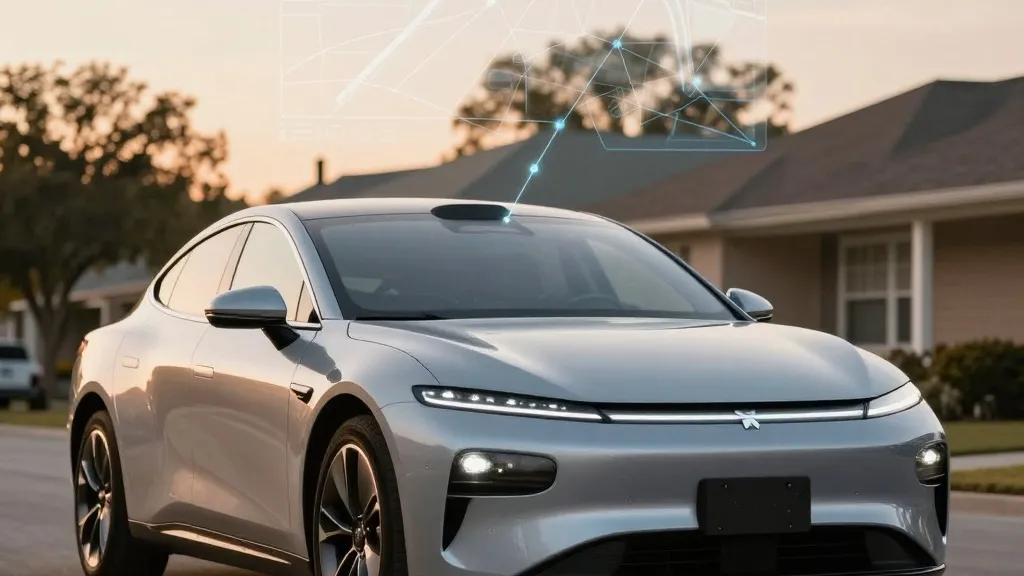
For seven years, Tesla’s leadership maintained that high-precision mapping was a fragile crutch for autonomous vehicles, arguing instead for a pure vision-based approach. That position has effectively collapsed. Tesla executives disclosed on the company’s Q3 2026 earnings call that the automaker is now building its own proprietary maps to address the most common failures of its Full Self-Driving (FSD) system, including route selection, parking, and speed limit recognition.
The decision represents a significant tactical shift for the Austin-based electric vehicle maker. By leveraging data from its existing fleet to construct these maps, Tesla is adopting a methodology strikingly similar to that used by Waymo, a rival that relies on detailed, sensor-generated maps to operate its robotaxi service. This move underscores a growing consensus in the industry that vision alone may not be sufficient to handle the complexity of real-world driving environments.
The impetus for the change came directly from shareholder feedback. During a question-and-answer session, a retail investor highlighted that mapping errors remain a primary complaint among FSD users, specifically citing issues with speed limits, parking spots, and typical route choices. The investor questioned why Tesla continued to rely on third-party map data rather than generating its own.
Ashok Elluswamy, Tesla’s VP of AI, validated the critique, stating that the company should not depend on external providers for this critical data. He explained that Tesla is developing a new AI-based architecture that will use collective learning from the fleet to create maps. This system is designed to not only improve navigation accuracy but also learn individual driver preferences and respond to voice commands. Elluswamy noted that this technology will initially manage the start and end of trips in FSD version 15, with broader navigation and parking integration expected in subsequent months.
This pivot is particularly notable given Tesla’s historical stance. In 2019, CEO Elon Musk famously called high-precision lane maps a "huge mistake" and a "really bad idea" that made systems brittle. At the same time, he dismissed lidar as a "fool’s errand." The company’s current strategy appears to contradict that earlier messaging, as it now acknowledges that its end-to-end vision system struggles with basic environmental understanding, such as reading simple road signs.
Recent data supports the need for this correction. Last month, a Belgian road safety group found that FSD vehicles exceeded speed limits in 55% of 30 km/h zones tested in Brussels, often because the car’s interface displayed an incorrect limit of 50 km/h. In the United States, the National Highway Traffic Safety Administration is weighing an investigation into claims that roughly 1,000 Tesla Robotaxis, including Model Y and Cybercab vehicles, have sped through active school zones. These incidents suggest that the vision system frequently fails to process static environmental cues reliably.
The new approach aligns Tesla’s operational model with the industry standard for autonomous driving. Waymo maps cities by driving sensor-equipped vehicles through them before launching services, then updates those maps as the fleet continues to operate. Tesla is now describing a similar process, where its cars collect visual data to feed a central map that improves driving performance across the entire fleet. While Tesla is not yet advertising centimeter-level HD maps, the trajectory suggests a move toward increasingly detailed geographic data.
This development raises questions about the timeline for unsupervised FSD in consumer vehicles, which has been pushed to the second quarter of 2027. Critics argue that the delay is further evidence that the vision-only strategy requires reinforcement. By building its own maps, Tesla is acknowledging that it must define the boundaries of its service areas more precisely, mirroring the geofenced operations of its competitors. The decade-long push toward self-driving appears to be converging on the same technical solutions that Tesla once dismissed.
As Tesla integrates this new mapping layer, the distinction between its approach and that of other autonomous vehicle developers narrows. The company is no longer solving driving with cameras alone in any environment; it is using fleet-generated data to create a digital representation of the world that guides its vehicles. For consumers and regulators alike, the focus will now shift to whether this map-based layer can reliably fix the speed limit and routing errors that have plagued the FSD system for years.
Source: Electrek