Terafab Equipment Acceleration Pushes Texas Chip Fab Timeline
Tesla and SpaceX are moving up equipment deliveries to hit a 2028 production date, a plan that Musk calls aspirational.
By Fatima Zayed ·
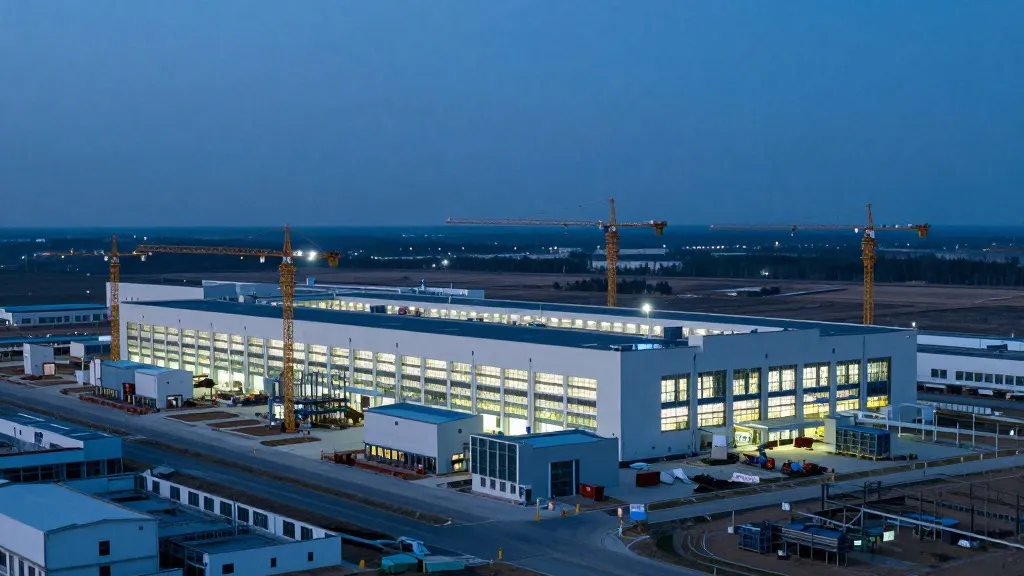
Tesla and SpaceX are accelerating the delivery of critical manufacturing equipment for their joint Terafab semiconductor project, a move intended to support a target for volume chip production in the third or fourth quarter of 2028. This schedule, announced by Elon Musk during a SpaceX earnings broadcast on October 20, is described as "highly aspirational" and subject to "big error bars."
The primary facility for the project is planned for Gibbons Creek, Texas, with a goal of producing one terawatt of AI computing power per year. The facility is designed to fabricate logic, memory, and advanced packaging architectures in a single location. To meet its production targets, Terafab will require extreme ultraviolet lithography systems, which will operate using Intel's 14A manufacturing node technology.
The acceleration of equipment deliveries is a key factor in pursuing this timeline. "These are very aggressive dates, and we're very appreciative of ASML and all of our other suppliers in accelerating equipment deliveries in order to achieve this outcome," Musk stated. ASML is the sole commercial supplier of the high-cost EUV systems required for leading-edge chip production.
The supply chain for the project includes several major equipment manufacturers. American companies such as Applied Materials, Lam Research, and KLA Corporation, along with Japan's Tokyo Electron, are providing machinery for front-end processing and process control. Additionally, talks are underway with about 10 South Korean equipment makers for specialized components.
The project's first experimental test chip is scheduled for production at a research facility in Austin, Texas, around the second quarter of 2027. Intel joined the venture in April 2026 to assist with the development and refactoring of silicon fabrication technology. The first EUV tool for Terafab was previously slated for delivery in mid-2027.
The stated output for Terafab is exceptionally large. Once fully operational, the commercial value of its chip production would rank the facility among the top 20 global country GDPs. For comparison, Switzerland's GDP is approximately $1.14 trillion.
The project's production scale has faced skepticism from industry experts. Research firm Gartner estimates total global AI-optimized data center capacity at roughly 44 gigawatts as of late 2026, which represents about 4.4% of Terafab's planned annual output. However, global AI computing capacity has grown by approximately 3.3x to 3.4x per year since 2022, according to EpochAI.
Terafab is intended to supply chips for internal projects, including xAI's computing clusters, self-driving vehicles, Optimus humanoid robots, and SpaceX's orbital AI data center, as well as for the broader AI industry. The facility aims to reduce potential shortfalls of advanced AI processors from external foundries such as TSMC. The timeline for achieving volume production remains subject to significant uncertainty.
Source: Tom's Hardware